
White-Collar Enforcement: What Businesses Should Watch For
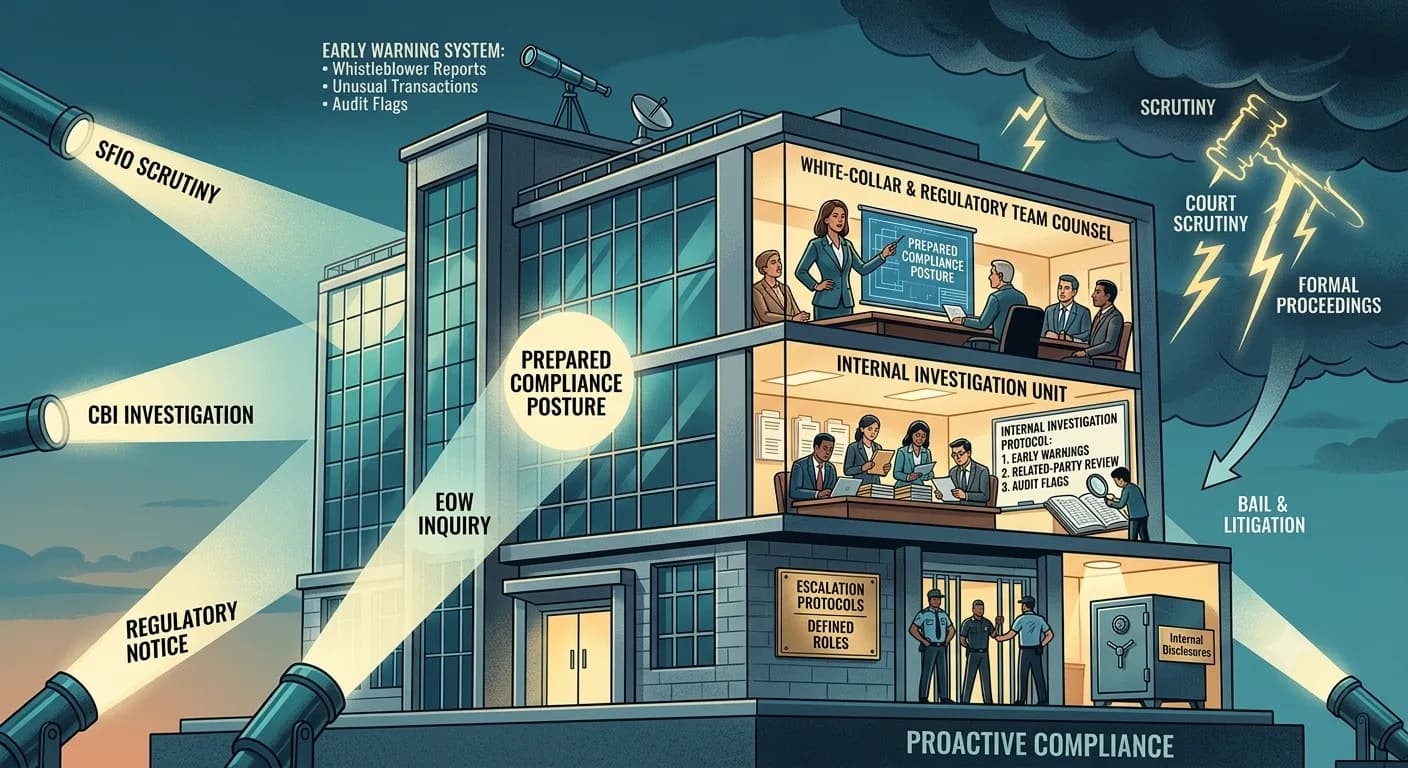
Regulatory and investigative agencies — including the Serious Fraud Investigation Office, the Central Bureau of Investigation, and the Economic Offences Wing — continue to take an active interest in corporate conduct, particularly where financial irregularities, related-party transactions, or statutory non-compliance are alleged. For businesses, the practical question is less about whether scrutiny will occur, and more about how prepared the organisation is when it does.
Early Warning Signs
Whistleblower complaints, unusual related-party transactions, or irregularities flagged during a statutory audit are often the first indicators that a matter could escalate into a formal investigation. Businesses that treat these as early warning signs — rather than isolated issues — are typically far better positioned if scrutiny follows.
The Value of Internal Investigations
A prompt, well-documented internal investigation, conducted with appropriate legal oversight, can materially change how a business is perceived by regulators and, if matters proceed further, by courts. It demonstrates good faith and can help contain issues before they become the subject of formal proceedings.
Responding to Regulatory Notices
How a business responds to an initial notice or summons — the tone, the completeness of disclosures, and the speed of response — often shapes the trajectory of the matter that follows. A defensive or incomplete response can invite closer scrutiny; a measured, well-advised one can sometimes resolve concerns at an early stage.
Bail, Anticipatory Bail, and Litigation Strategy
Where matters do proceed to formal proceedings, decisions around bail and anticipatory bail applications require careful strategic judgment — informed by an understanding of how similar matters have played out before the relevant courts.
Building a Compliance Posture Before It's Tested
The organisations best equipped to handle regulatory scrutiny are rarely the ones scrambling to respond after a notice arrives — they are the ones that have already built clear escalation protocols, defined roles for internal investigations, and a working relationship with counsel experienced in this area.
This article is intended as general commentary and does not constitute legal advice. For guidance on a specific matter, please get in touch with our White-Collar & Regulatory team.
